Action for Land Tax and Economic Reform

WHAT IS LAND VALUE TAX AND WHY WOULD IT BE GOOD FOR BRITAIN?

Land Value Tax (LVT) is an annual levy on the unimproved value of land, disregarding buildings, personal property, or other improvements. Regarded by economists since the 18th century as an efficient and progressive tax, LVT places the tax burden on titleholders proportionally based on location value, which strongly correlates with overall wealth.

Key Arguments for LVT

  • Social Justice: Basing taxation on assets rather than income helps reduce inequality. In the UK, where the top 1% own nearly 25% of property, LVT ensures asset owners pay a fairer share compared to income earners.
  • Infrastructure Financing: LVT captures the location windfall generated by public infrastructure projects (such as high-speed rail lines) directly from the landowners who benefit most, rather than burdening general taxpayers.
  • Economic Efficiency: Because LVT applies regardless of how productively a plot is used, it penalizes land speculation, empty homes, and run-down sites. This encourages urban regeneration while shifting the overall tax burden away from income, profits, and enterprise.

Key Mechanics & Misconceptions

  • Plot-Based Value: A vacant plot and a built-on plot of the same size in the same location pay equal tax.
  • Publicly Derived Value: Location value stems from natural geography or community investments, making it just and efficient to tax.
  • Green Protection: Contrary to myths that LVT harms green spaces, it promotes urban revitalization—evidenced by cities like New York, where surrounding property tax gains funded Central Park.

Watch our Spring 2022 Conference Fringe

YouTube

We've hidden Post Corona: The Case for Shifting Taxes onto Land with Ed Randall to prevent cookies being set that you haven't consented to. Please enable marketing cookies to see it.

Go to YouTube

Latest News

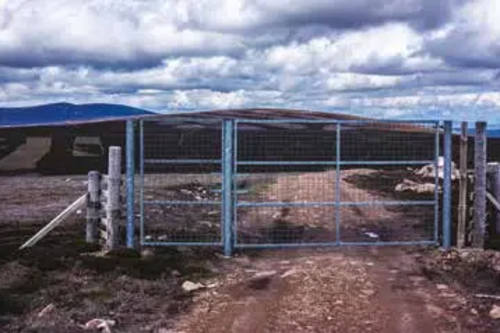
Electric fencing and gate on Millden Estate, Angus.

Socialism for the Rich -Subsidies for Scottish Shooting Estates

In a damning report produced for the League against Cruel Sports, Andy Wightman and & Dr Ruth Tingay shows how Scottish grouse shooting estates receive lavish govermnent subsidies. One estate, Glenogil, which is managed as a grouse shooting estate, receives agricultural subsidies from the Scottish Government. The presence of a sheep flock (used to 'mop up' ticks that would otherwise attack the grouse) is sufficient to qualify the estate as an agricultural holding. In 2010, the estate received £368,787 in public funds and in 2011, £346,757. Such taxpayer provided funds allows the building of electric fences and private roads that scar the countryside so that well heeled grouse shooters are saved the effort of trekking across the moors. Meanwhile, employees on grouse estates are paid less than the national minimum wage.

DC
14 Oct 2015
View

Hong Kong’s Economic Miracle Explained by Andrew Purves

NO DEBT, HIGH GROWTH, LOW TAX Hong Kong's Economic Miracle Explained by Andrew Purves Governments around the world are wrestling with the problems of enormous debts, low growth, high unemployment and a gap between the demands of public expenditure and what can be raised through taxation. This problem has been acute since the financial crisis, but has been a hallmark of western economies for decades.

24 Sep 2015
View

What's striking about Henry George proposals is how relevant they are in the 21st Century #LVT

. Policy proposals Tax on land and natural resource monopoly Free trade - opposed to tariffs, which were at the time both the major method of protectionist trade policy and an important source of federal revenue Supported the use of government issued paper currency such as the greenback. He opposed the use of metallic currency (such as gold or silver) and money issued by private commercial banks Citizen's dividend - proposed to create a pension and disability system, and that excess public revenues from land rents could be distributed to residents "as a right" instead of as charity to end or restrict the use of intellectual property to have government own and manage all right-of-way and "natural" monopolies, such as utility companies and mass transportation, to replace contract patronage with the direct employment of government workers, with civil-service protections, to implement campaign finance reform and political spending restrictions. https://en.wikipedia.org/wiki/Henry_George#Policy_proposals

18 Sep 2015
View

From the Lib Dem ALTER YouTube Land Tax Playlist

YouTube

We've hidden Why Henry George believed land value taxes to be a superior tax system to prevent cookies being set that you haven't consented to. Please enable marketing cookies to see it.

Go to YouTube

This website uses cookies

Please select the types of cookies you want to allow.